The files, digitised and given "preliminary conservation treatment" by the National Archives of India, were released on the birth anniversary of Netaji.

'Modi and Shah know their politics. That is why the alarmed switch to reservations, and raising the threat from 'vote bank' politics,' says Shekhar Gupta.

Attacking the Congress and United Progressive Alliance on price rise at a massive BJP rally in Bengaluru, Narendra Modi tells the crowd that Congress is worried sick about the BJP's growing popularity. Vicky Nanjappa reports.
'The downslide has been rapid leading up to the number one and number two of the organisation flinging against each other horrendous accusations of bribery and tampering with investigations for personal gain, and the latest petition to the Supreme Court by the joint director of the CBI, M K Sinha, opening a veritable Pandora's Box of repulsive skeletons,' notes B S Raghavan, the distinguished civil servant who witnessed the CBI's birth.
The message for 2024 is that the man on the street is not going to be euphoric if the G-20 crowns Modi as king-emperor for 2023, or if India sends its first man to space just ahead of the Lok Sabha polls. Even a 'temple consecration' in Ayodhya, or a Uniform Civil Code, or both of them together, may not have enough electoral purchase if fuel and commodity prices are not rolled back, and money-in-the-pocket does not fatten, points out N Sathiya Moorthy.

'Having dealt with security and insurgency for 15 years, I am fully convinced that the steps taken by the government in regard to J&K and the measures in force there are essential,' says B S Raghavan, the distinguished civil servant.

Terrorism and Afghanistan were the focus points of Prime Minister Narendra Modi's talks with Uzbek President Islam Karimov on his first visit to Central Asia.

'Savarkar was the closest the RSS had to a freedom movement icon, however flawed.' 'Indira Gandhi wasn't going to gift him to them.' 'And a non-career politician like Dr Singh understands it.' 'It is just that his party never listened to him,' says Shekhar Gupta.

'The only effective defence against a suicide attack is 'pre-emptive' destruction of the attacker,' says Colonel Anil A Athale (retd).

'The issue is not whether the farm laws are beneficial for the farmers or not.' 'The farmers have taken a stand that they do not want these laws.' 'Why do you want to thrust these laws down their throat?'

'What Trump and Kim have demonstrated is that leaders need not remain prisoners of the status quo and they can, by showing the necessary will and courage, break out of the hang-ups and constrictions of the past and carve out a new pathway for themselves,' says B S Raghavan.
'If development, investment, employment, implementation, credibility and commitment are ensured, security will automatically improve and subversive and militant elements will lose ground and be neutralised by the people themselves,' says B S Raghavan, the distinguished civil servant.

Wielding the broom, Prime Minister Narendra Modi on Thursday launched the country's biggest-ever cleanliness drive that is expected to cost over Rs 62,000 crore, asserting that the "Swachh Bharat" mission is "beyond politics" and inspired by patriotism.
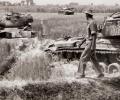
Declassified US documents of the era indicate.

'Modi should not feel shy of proclaiming as the meaning of secularism regard for all religions in proportion to their numbers in tune with the spirit of democracy and adopting it as State policy,' says B S Raghavan.
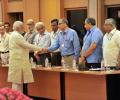
From Swachh Bharat to spearheading the Make in India campaign, the PMO seems to be at the centre of all policies, writes Nivedita Mookerji.

'The Indian Air Force wanted to fight. My squadron leaders and flight lieutenants, all of us were eager to fight. Unless they are keen I can't have confidence.' Marshal of the Air Force, the legendary Arjan Singh, on the 1965 War.

'When war is thrust on you as in 1962 and 1965 or is tempting as in 1971, ensure that all other fronts are kept quiet, leaving your army free to deal with one,' says Shekhar Gupta.
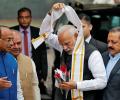
'It seemed it was more than an anti-incumbency vote; it was an outright rejection of the BJP by the people after due deliberation and an expression of their disillusionment with Modi's leadership,' says B S Raghavan.
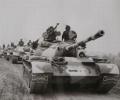
The 1965 war teaches us that war by escalation is a real possibility. Despite clear threats, Pakistan never believed that India will ever cross the international border. In the age of nuclear deterrence, this failure to deter Pakistan is the central lesson of 1965, says Colonel Anil Athale (retd).
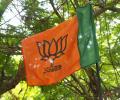
One cannot but infer that this brouhaha is a crafty ploy to create an issue out of a non-issue. An overview of post-independent India's history reveals that it is not the BJP or the Sangh Parivar but Marxist historians who have been guilty of debasing history to suit their vested interests, says Vivek Gumaste.
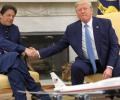
'Modi, with his sharply honed political savvy and undoubted grasp of international affairs, is a past master at taking the measure of world leaders.' 'He would be the last person to think of the unpredictable and not too well-regarded Trump as the mediator,' says B S Raghavan.

In the second and final part of his column, Col Anil Athale says the fight between forces of Indian nationalism and Macaulayism aided and abetted by West is going to be long, hard and dirty. The outcome will decide whether India becomes a superpower or continues to wallow in the swamp of underdevelopment.

Rohini Bhajibhakare won't waste a moment on this statistic because she has far more important things to do.
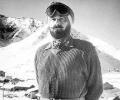
Lieutenant General Harbakhsh Singh, GOC, Western Command, disobeyed the then army chief and took on a superior Pakistani armoured column. The Indian Centurion tanks outgunned the more modern Pakistani Patton tanks in the battle at Khem Karan, that proved the turning point of the 1965 War. Brigadier Gurmeet Kanwal (retd) salutes the Soldiers' General.

Mahesh Rangarajan, director of the historic Nehru Memorial Museum and Library in New Delhi, tells Sheela Bhatt how the first prime minister will always remain relevant, and the efforts being made to keep his legacy alive.
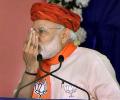
'Modi's political economy is more inspired by Indira Gandhi than Vajpayee.' 'She so wanted an Opposition-mukt Bharat.' 'Sounds familiar?' asks Shekhar Gupta.
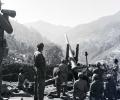
Fifty years ago, India and Pakistan fought a short but bloody war. The author finds out how Sainik Samachar, the defence ministry's journal, reported it.

'The question now is how long the exercise in perfection he created will last once his influence isn't there any longer,' says Sunanda K Datta-Ray.
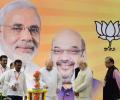
'For half a century, Delhi has not seen a truly powerful ruling party president.' 'The Cabinet, chief ministers, and even the heads of the most powerful departments and agencies now acknowledge where power lies, besides the prime minister's office,' says Shekhar Gupta.

20 years ago this day, May 11, 1998, India conducted its second nuclear test at Pokharan in Rajasthan. In a fascinating interview on Rediff.com, K Subrahmanyam revealed how Indian PMs reacted to nuclear ambitions.
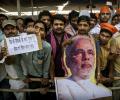
'Modi's victory is his own victory. Now what he has done thereafter, it seems to me, leads us to believe that he was a bit too prolific with his promises.' 'One achievement of Modi's I will praise is that he has put the fear of God among his ministers and officials.' 'Indira Gandhi's sentiment of controlling everything, centralising power in to her hands is the quality that persists in Modi' Veteran journalist Inder Malhotra casts his experienced gaze on one year of the Modi Sarkar.

'All of Indira Gandhi's bad economic ideas are being strengthened, from nationalised banks to anti-poverty, handout yojanas,' says Shekhar Gupta.
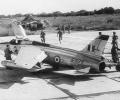
'As the IAF kicks off another round of myth-making -- launching a year-long commemoration of the 50th anniversary of the 1965 India-Pakistan war -- it is worth remembering how little there was to celebrate in those September days when the underdog PAF got the better of the IAF in raid after raid, dogfight after dogfight.'
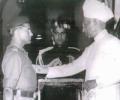
Decorated with a Vir Chakra for leading an attack that destroyed four tanks, Risaldar Ayub Khan shared a name with the Pakistani president who ordered the invasion of India in 1965. India's Ayub came from a family of soldiers and made his country proud.

'Rahul is only making a pathetic public spectacle of his lack of judgment and good sense by hallucinating that somehow, the Congress, or whatever political combine is cobbled together, will displace the BJP at the coming Lok Sabha election by constantly harping on the Rafale deal,' argues retired civil servant B S Raghavan.
Flowing from an inadequate understanding of Tamil history and politics is an urban elitist mindset that does not seem to be able to touch and feel the real angst of the larger Tamil-speaking masses, cutting across the social and economic status of the individual, says N Sathiya Moorthy.

If India is to follow a smart cultural diplomacy, it has unmatched advantages over both China and Pakistan, says Colonel Anil A Athale (retd).

'What hurts people most is dynastic impulses and corruption under a family-ruled Congress party -- and Nehru has borne the brunt of it... I cannot be blinded by how the Nehru family has functioned but just as Gandhi can't be judged by his descendents, why should Nehru?' asks political scientist Ashutosh Varshney.

'Until India fully absorbs the fundamentals of international relations, it will continue to get evil for good,' says Brahma Chellaney.
 © 2026 Rediff.com - Advertise with us - Disclaimer - Privacy Policy - Sitemap - Feedback - About us - Terms of use - Grievances